

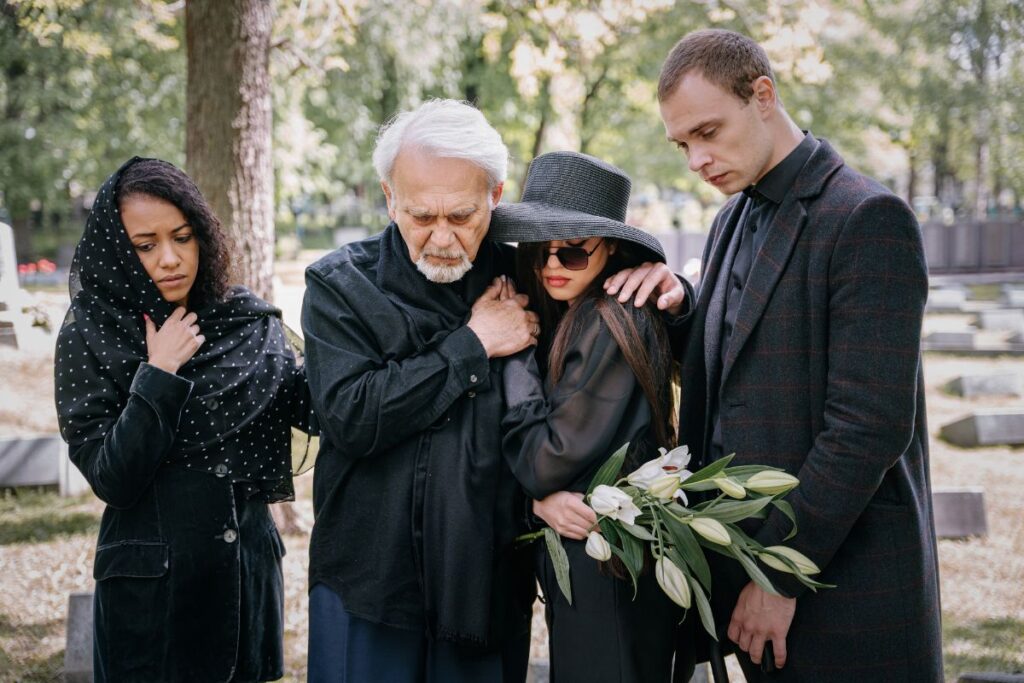
For families navigating loss, summer can bring an unexpected weight. A thoughtful guide to traveling, planning, and finding moments of peace when the season looks different than it used to.
Summer is supposed to be the easy season. Long evenings, lake trips, family reunions, the smell of charcoal drifting between neighborhood backyards. For families who have recently lost someone, though, the season can arrive with a quiet difficulty that catches them off guard. The vacation home she always opened up for the Fourth of July. The road trip he planned every year without ever really finishing the planning. The empty seat at the picnic table that everyone notices and nobody mentions.
At Demeros Funeral and Cremation Services, we walk with families through the immediate weeks after a loss, but we also know that grief does not follow a calendar. The first summer without someone is often harder than families expect, and the demands of travel and gatherings can intensify what was already a complicated season. This guide is for the families who are wondering how to move through it — whether that means traveling, staying home, or finding a middle path that honors both their grief and their need to keep living.
Why Summer Hits Differently
Grief tends to attach itself to routines, and summer routines run deep. Many families have decades of patterns tied to the season — the same beach, the same cabin, the same Sunday cookout, the same drive up to Wisconsin or down to Indiana. These traditions were built around the people who started them, and when one of those people is no longer there, the tradition itself can feel hollow.
There is also the simple fact that summer is when families gather. Weddings, graduations, reunions, baptisms, milestone birthdays. Every gathering becomes another moment where the absence is felt — in the toast that no one knows how to give, in the photograph everyone is trying not to look at, in the empty chair that someone has thoughtfully or thoughtlessly left at the table.
None of this means summer has to be endured rather than lived. It does mean that planning the season with intention, rather than letting it happen to you, can make a meaningful difference.
Before You Travel: Honest Questions Worth Asking
If you are weighing a summer trip in the months after a loss, a few questions can help clarify what you actually want and need.
Is this trip something you want, or something you feel obligated to take? The annual family reunion, the wedding three states away, the vacation that was booked before the loss happened — sometimes the right answer is to go. Sometimes the right answer is to send your regrets and stay home. Both are valid. The people who love you will understand either choice.
What will the trip ask of you emotionally? A quiet week at a rented cabin is a very different experience than a family reunion with sixty people asking how you are doing. Neither is better. But knowing which kind of trip you are taking lets you prepare for it.
Who will be there, and who will not? Travel often puts us in close quarters with people who knew our loved one differently than we did. That can be a source of comfort or a source of strain, sometimes both in the same afternoon. Going in with realistic expectations helps.
Do you have an exit plan? The ability to leave a gathering early, take a walk alone, retreat to a hotel room, or change your return flight is not a failure of resilience. It is a practical kindness to yourself. Build the exit into the plan from the start.
Practical Considerations Before You Leave
Travel logistics carry an emotional weight after a loss that they did not carry before. A few practical matters worth handling in advance:
- Important documents. If you are still settling an estate or handling paperwork tied to the loss, bring copies of essential documents or store them in a secure cloud folder you can access from anywhere. Death certificates, insurance information, and account details are difficult to chase down from a beach house.
- Medication and routine. Grief disrupts sleep and appetite. If your doctor has prescribed anything to help you through this period, do not leave it behind. Bring enough for the trip plus a few extra days in case of travel delays.
- A grief contact. Identify one person at home you can call or text when the day gets heavy. A sibling, a close friend, a grief counselor, a clergy member. Just knowing the contact is there makes the trip easier.
- Permission to rest. Travel after loss is more tiring than ordinary travel. Build in down time. Skip the optional activity. Take the nap.
When the Trip Itself Was the Tradition
Some of the hardest summer trips are the ones that were a tradition with the person you lost. The annual fishing weekend. The cottage on Lake Geneva. The road trip up the western shore of Michigan. Returning to these places without them can feel like an act of courage and an act of grief, sometimes simultaneously.
Families we have served have approached these trips in different ways, and there is no single right answer. A few approaches that have helped:
Go, but change one thing. Take the same trip, but stay at a different cabin. Eat at a new restaurant. Drive a different route. Small changes can ease the weight of expectation without abandoning the tradition entirely.
Go, and honor them openly. Bring a photograph. Pour their favorite drink at sunset. Take the family hike they always insisted on. Letting the absence have a place at the trip can be more healing than trying to ignore it.
Skip a year. Some traditions need a year off. Going back in year two, with more distance and more steady footing, can feel more bearable than forcing it in year one.
Start something new. A different destination, a different group, a different season. Building something new is not a betrayal of the old tradition. It is a way of honoring that what you had with that person was specific to them.
Carrying Their Memory With You
For many families, summer travel becomes an opportunity to bring a loved one’s memory into a new place rather than leaving it behind. Cremation families often find these moments especially meaningful, since they may be able to carry a small keepsake urn or a portion of ashes for scattering in a location that mattered.
A few ways families have woven remembrance into their summer travels:
- A scattering with intention. If your loved one chose cremation and asked to be scattered somewhere specific, summer travel often provides the opportunity. We can help families navigate the practical and legal considerations of scattering at parks, beaches, and waterways, including locations far from Chicago.
- A photograph that travels with you. A small framed photograph in the suitcase, set on the nightstand at every stop. A simple practice that keeps the relationship in the present tense.
- A letter written along the way. Some families bring a notebook and write to their loved one from each new place. A few sentences. What you saw. What you wished they had seen with you.
- A toast at sunset. Wherever you are, on whatever evening feels right, raise a glass. Speak their name aloud. Let the people you are with hear it.
When Staying Home Is the Right Choice
There is a quiet pressure in grief to perform recovery — to show friends and family that you are doing fine, that you are getting back to normal, that you are not letting the loss define you. Travel can sometimes become part of that performance, and that is when it stops being helpful.
If your honest answer is that you do not want to go anywhere this summer, that answer deserves respect. Staying home gives you control over your environment in a way that travel cannot. You know where the photographs are. You know which restaurants to avoid and which to visit. You know when to be around people and when to close the door.
A few ways to make a stay-at-home summer feel like a season rather than a holding pattern:
- Small local trips. A day at the Chicago Botanic Garden. A morning at the lakefront before the crowds. A drive to Starved Rock or Galena. Day trips offer change of scenery without the emotional cost of extended travel.
- One small project. A garden bed planted in their memory. A photo album organized over a series of evenings. A letter written to family members about who they were. Projects give shape to a season that might otherwise feel shapeless.
- One social commitment per week. Not more, not less. A lunch with a friend, a walk with a neighbor, a phone call with a family member. Enough connection to feel held, not so much that it overwhelms.
- Permission to be quiet. Reading on the porch is a valid summer activity. So is sleeping in. So is doing nothing in particular.
Helping Grieving Family Members Navigate Summer Gatherings
If you are not the one most directly grieving but you are helping someone who is, summer gatherings present their own challenges. A grieving parent at a graduation party. A widowed grandparent at a family reunion. A sibling who lost a spouse trying to make it through a Fourth of July cookout.
The most helpful thing you can offer is usually not advice. It is presence and practical support.
- Ask what they want, not what you assume. Some grieving family members want their loss acknowledged openly. Others want a few hours of feeling normal. Both are valid and the only way to know is to ask.
- Build in a graceful exit. Drive separately. Offer to take them home whenever they are ready. Let them know in advance that leaving early is fine.
- Mention the person who died. Many grieving people say that one of the hardest parts of social gatherings is how studiously everyone avoids saying the name of the person they lost. Saying the name — sharing a memory, telling a small story — is almost always welcome.
- Follow up afterward. A text the next day. A phone call later in the week. Gatherings are exhausting for grieving people, and the days that follow can be especially low.
Pre-Planning Before You Leave
One quiet thing summer travel can prompt for many families is the realization that they have not yet pre-planned their own funeral arrangements. A long drive, a flight delay, a quiet evening on a porch — these moments often surface questions families have been postponing. Who would handle things if something happened to me? Have I made it easier or harder for the people I love?
Pre-planning is not morbid, and it is not rushed. It is one of the most generous gifts you can give the people you love. Before you travel this summer, consider whether you have your essential information organized in one place: insurance details, preferred arrangements, the names of people who should be contacted. Even a simple document tucked into a kitchen drawer can spare a family weeks of uncertainty later.
If you would like to discuss pre-planning before your travels — or after — we are here. There is no obligation and no pressure, just a conversation that gives your family peace of mind.
Returning Home
The return from a trip after a loss carries its own weight. The empty house. The mail piled up. The voicemail that no one will leave anymore. Coming home can sometimes feel harder than leaving did.
A few small practices that have helped families ease the return: arrive home in daylight if possible. Have something simple in the freezer so you do not have to think about dinner. Reach out to one person on the day you get back, even if it is just a text. Let yourself be tired without rushing back into normal.
However your summer takes shape this year — whether you travel widely, stay close to home, or do some of both — know that there is no correct way to grieve through a season. There is only the way that is honest for you, in the company of the people you love, with the memory of the person you lost held gently between you.
At Demeros Funeral and Cremation Services, we believe the work of honoring a loved one continues long after the funeral. If you need guidance, resources, or simply a conversation with someone who understands, Arthur G. Demeros and our team are available 24 hours a day. Your call comes directly to us — every time.





 English
  Spanish