


A Greek Orthodox funeral follows a set order: a short Trisagion prayer service the evening before, the funeral itself in the church, and a graveside rite where the priest blesses the grave with oil and earth. Icons, prayer cards, and a white burial cloth called the Savano are part of the tradition. A shared meal called the Makaria follows the burial.
If you’re planning a Greek Orthodox funeral for someone you love, you may already sense that this isn’t something you can put together on your own. The traditions run deep, and each part carries real meaning for your family and your faith. Knowing what to expect can bring a measure of peace to a hard week.
This guide walks through what actually happens, so you can focus on your family instead of the details.
Arthur Demeros has spent over a decade helping Chicago-area families through funerals, including many rooted in Greek Orthodox faith and community. This article will help you know what comes next.
What Happens Before the Funeral: The Trisagion Service
The Trisagion is usually the first formal service your family will attend. It’s short, generally 15 to 20 minutes, and it takes its name from the opening prayer, repeated three times at the start.
Some parishes hold the Trisagion at the church the evening before the funeral. Others hold it at the funeral home. Either is customary, so it’s worth asking your priest which your parish prefers.
Family and close friends usually gather for this service. The priest chants prayers, and mourners often have a chance to view the body and pay their respects. It’s a quieter moment than the funeral itself, and many families use it as a first chance to be together.

The Funeral Service: The Heart of the Day
The funeral service itself is held the next day in the church. It typically runs 45 minutes to an hour, led by the priest with chanted hymns and prayers.
Two scripture readings are part of nearly every Greek Orthodox funeral: a passage from Paul’s letter to the Thessalonians and a passage from the Gospel of John. Both speak to the Church’s belief in resurrection and eternal life.
Families who want a traditional funeral service approach alongside these rites can talk with Demeros about combining the church service with visitation, flowers, and other personal touches. The structure of the service stays the same, but the surrounding details can reflect your loved one’s life.

Symbols and Sacred Items You'll See
A Greek Orthodox funeral is full of visual meaning, and knowing what you’re looking at can make the service feel less unfamiliar.
An icon, often depicting Christ or the Resurrection, is placed near or on the body, and mourners are usually invited to kiss it as a final farewell. A cross may rest on the chest. Near the end of the service, the priest anoints the body in the form of a cross with oil and earth, a moment tied to the words “you are dust, and to dust you shall return.”
Prayer cards with the deceased’s name and dates are common, along with the Savano, a white burial cloth placed over the body before the casket is closed. It symbolizes the white garment received at baptism. Families sometimes bring one back from a visit to a Greek Orthodox holy site, or a parish can help arrange one. If you’d like to understand how these customs fit into the wider picture of religious funeral traditions, we’ve written a broader guide on the subject.
The Role of the Priest and Clergy
The priest leads every part of a Greek Orthodox funeral, from the Trisagion through the graveside rite. A chanter, sometimes called a psalti, sings the hymns throughout the service, and a deacon may assist depending on the parish.
Because the funeral follows the church’s liturgical calendar, your priest will confirm which days a funeral can be scheduled. It’s worth contacting your parish as soon as possible after a death so the timing can be set.
Coordinating between your priest and your funeral home doesn’t have to fall entirely on you. Understanding how a funeral director can help with these details, from scheduling to transportation, can lighten the load during a hard week.
The Graveside Rite and Burial
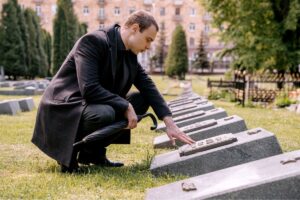
After the church service, the priest, family, and mourners process to the cemetery. There, the priest repeats a brief Trisagion at the graveside.
The priest then pours oil in the sign of the cross over the casket and casts a small amount of earth into the grave, reciting the same words spoken earlier in the church. Family members are welcome to stay and witness the casket being lowered if they wish.
Many Greek Orthodox families traditionally prefer burial to cremation, since burial is the Church’s long-held custom. If your family is weighing cremation, your priest is the right person to talk with about how your parish approaches it.
After the Funeral: The Makaria and Memorial Customs
Following the burial, it’s customary to gather for a meal called the Makaria, or mercy meal. It’s a time for family and friends to share stories, offer condolences, and support one another. It can be held at a restaurant, a church hall, or someone’s home.
Mourning doesn’t end with the burial. Memorial services, called mnemosyna, are typically held about 40 days after the death and again after one year, with some families also observing three months, six months, or an annual remembrance. A dish called koliva, made of boiled wheat, is often blessed at these services as a symbol of resurrection.
These customs give families a structure for grief that unfolds over time rather than all at once. If you’re looking for ways to keep a loved one’s memory present in the months ahead, our guide to honoring your loved one offers some gentle ideas.
How Demeros Coordinates Every Detail with Your Parish
Arthur Demeros is an active member of Holy Taxiarhai and St. Haralambos Greek Orthodox Church in Niles, and that connection shapes how Demeros Funeral and Cremation Services works with Greek Orthodox families across Chicagoland. The goal is always the same: make sure every rite, from the Trisagion to the graveside blessing, happens exactly as your family and your priest expect.
Because the funeral home is owner-operated, your call goes directly to Arthur, not a call center. He coordinates timing with your parish priest, arranges the Savano and other items your family needs, and can travel to meet families throughout the Chicago area. That kind of direct, personal coordination is part of what our Greek Orthodox funeral services are built around.
If you’re searching for a Greek Orthodox funeral home in Chicago that understands these traditions from the inside, not just from a checklist, that’s exactly the kind of care this practice was built to offer.
Frequently Asked Questions About Greek Orthodox Funeral Traditions in Chicago
What is a Trisagion service?
The Trisagion is a short prayer service, usually 15 to 20 minutes, held the evening before the funeral. It’s named for the opening prayer, repeated three times. Some parishes hold it at the church, others at the funeral home. Family and friends gather to pray for the person who has died and to view the body before the funeral the next day.
Can a Greek Orthodox family choose cremation for their loved one?
Traditionally, the Greek Orthodox Church has preferred burial and views cremation with caution, since it isn’t the historic practice of the faith. The Church’s funeral rites are generally not offered when cremation is chosen. If cremation is part of your plan, it’s best to talk with your priest early so your family understands your specific parish’s guidance.
Who is allowed to speak or give a eulogy during the church funeral service?
In most Greek Orthodox parishes, the priest leads every prayer and offers a brief homily at the end of the service; personal eulogies from family are traditionally not given inside the church itself. Many families instead share memories at the Trisagion the night before or at the Makaria meal afterward. Your parish priest can tell you exactly what is customary at your specific church.
What is the Savano, and why is it part of the service?
The Savano is a white burial cloth, often printed with a cross or an image tied to Christ’s resurrection, that is placed over the deceased before the casket is closed. It reflects the white baptismal garment a person receives when they enter the Orthodox faith. Many families purchase one through their parish or bring one back from a trip to a Greek Orthodox holy site.
How long does a Greek Orthodox funeral service typically last?
The Trisagion the night before runs about 15 to 20 minutes. The funeral service itself, held in the church the next day, usually lasts 45 minutes to an hour and includes hymns, scripture readings, and prayers led by the priest. The graveside rite that follows at the cemetery is brief, typically just a few minutes of prayer as the casket is lowered.
What is Makaria, and is the family expected to host it?
Makaria is the mercy meal held after the burial, where family and friends gather to share memories and support one another. It’s customary, though not required by the Church, and can be held at a restaurant, a church hall, or a family home. Many parishes can recommend caterers, and your funeral director can help you plan the logistics around it.
If your family is planning a Greek Orthodox funeral, or simply trying to understand what lies ahead, Demeros Funeral and Cremation Services is here whenever you’re ready. There’s no pressure and no obligation, just people who understand these traditions and want to help you honor them well. Arthur is available directly at (847) 302-7176, any hour, day or night. If you’d rather think through some of this before you need it, our plan ahead page is a good place to start.



 Spanish
 English